

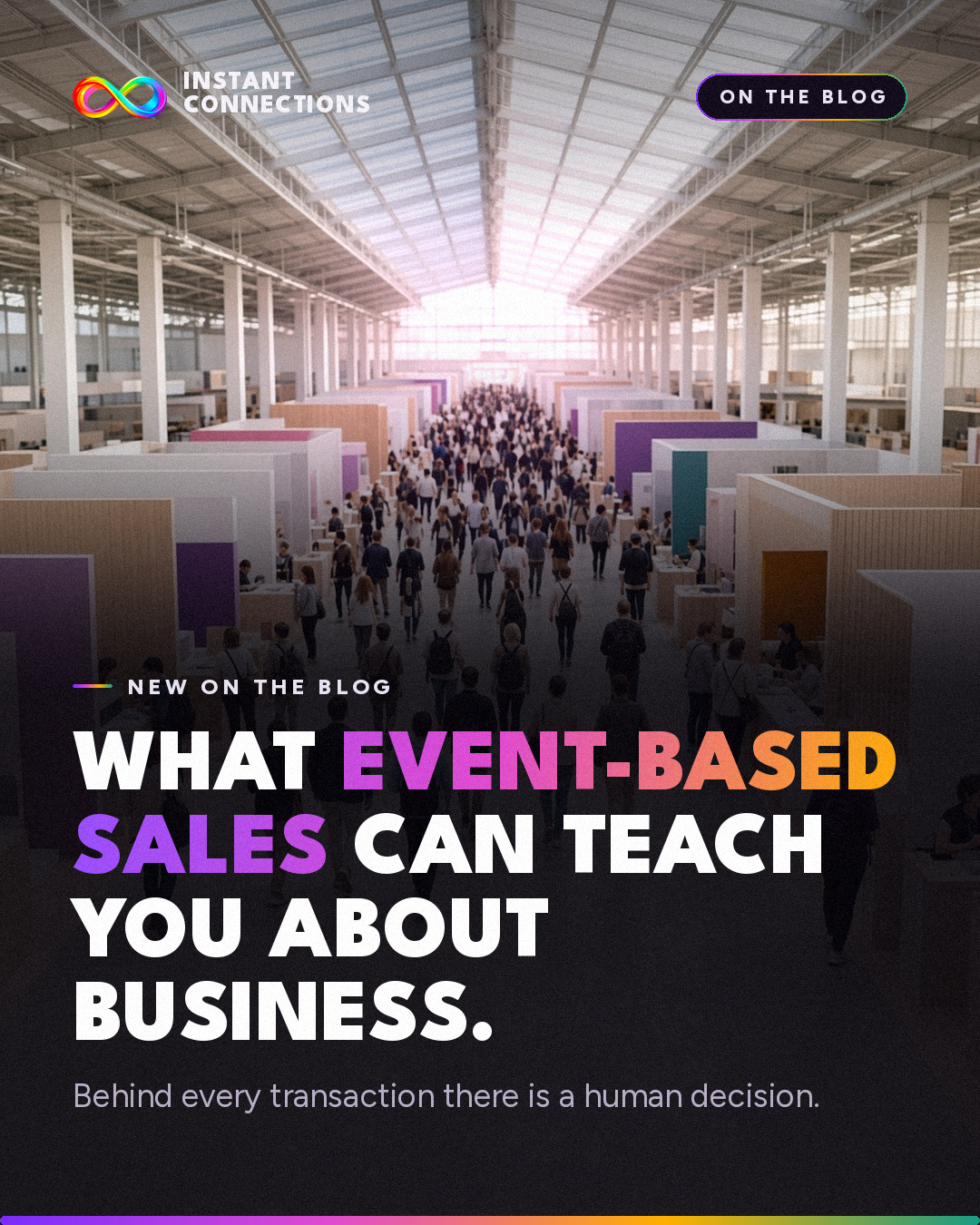
Picture a stand at a busy shopping centre on a Saturday afternoon. You have a few seconds to catch someone’s eye and a minute or two to earn their trust. Then they decide whether to stop or walk on. Nobody is filling in a form or clicking an advert. It’s two people having a conversation.
That’s event-based selling, and it’s one of the most honest tests a business can face. Here’s what it teaches.
1. First impressions aren’t a cliché, they’re the whole game
Online, a weak opening line can be fixed in the next email. Face to face, you rarely get a second chance. The best field teams learn to read body language, open with warmth rather than a script, and earn the right to keep talking. That’s useful in a boardroom as much as on a stand.
2. Feedback arrives instantly, so use it
A digital campaign might take weeks to show you what isn’t working. In person, you find out in minutes. If people hesitate at the same point, raise the same objection or light up at the same benefit, you learn something. Businesses that collect and act on that feedback in real time make better decisions than those relying on guesswork.
3. Trust is built, not bought
Automation has its place, but people still connect with people. A real conversation with someone who listens, answers honestly and doesn’t push builds a kind of credibility that is hard to get any other way. Every brand wants loyal customers, and loyalty usually starts with a moment of genuine connection.
4. Consistency is what turns a good day into a strong brand
One great conversation is luck. Hundreds of great conversations across different locations and different people take training, structure and a clear message. Event-based sales show that a brand is only as strong as the person representing it at that moment.
5. Resilience is a skill, and it can be learned
Not everyone will stop. Not everyone will say yes. Field sales teaches you to take “no” in your stride, stay positive and treat each new conversation as a fresh start. That mindset is valuable in any role and any industry.
6. Results should be measurable
Face-to-face doesn’t mean old-fashioned. Tracking engagements, conversions and the insights gathered on the ground turns every event into data a business can learn from.
The bigger lesson
Event-based sales remind us that behind every transaction there’s a human decision. Businesses that remember this listen more, adapt faster and build relationships that last.


